A Sweet Twist on Citrus: Making the Best Homemade Orange Marmalade
Bright, bittersweet, and bursting with citrus, this classic homemade orange marmalade recipe shows you how to use natural pectin from the fruit for a perfect set every time.
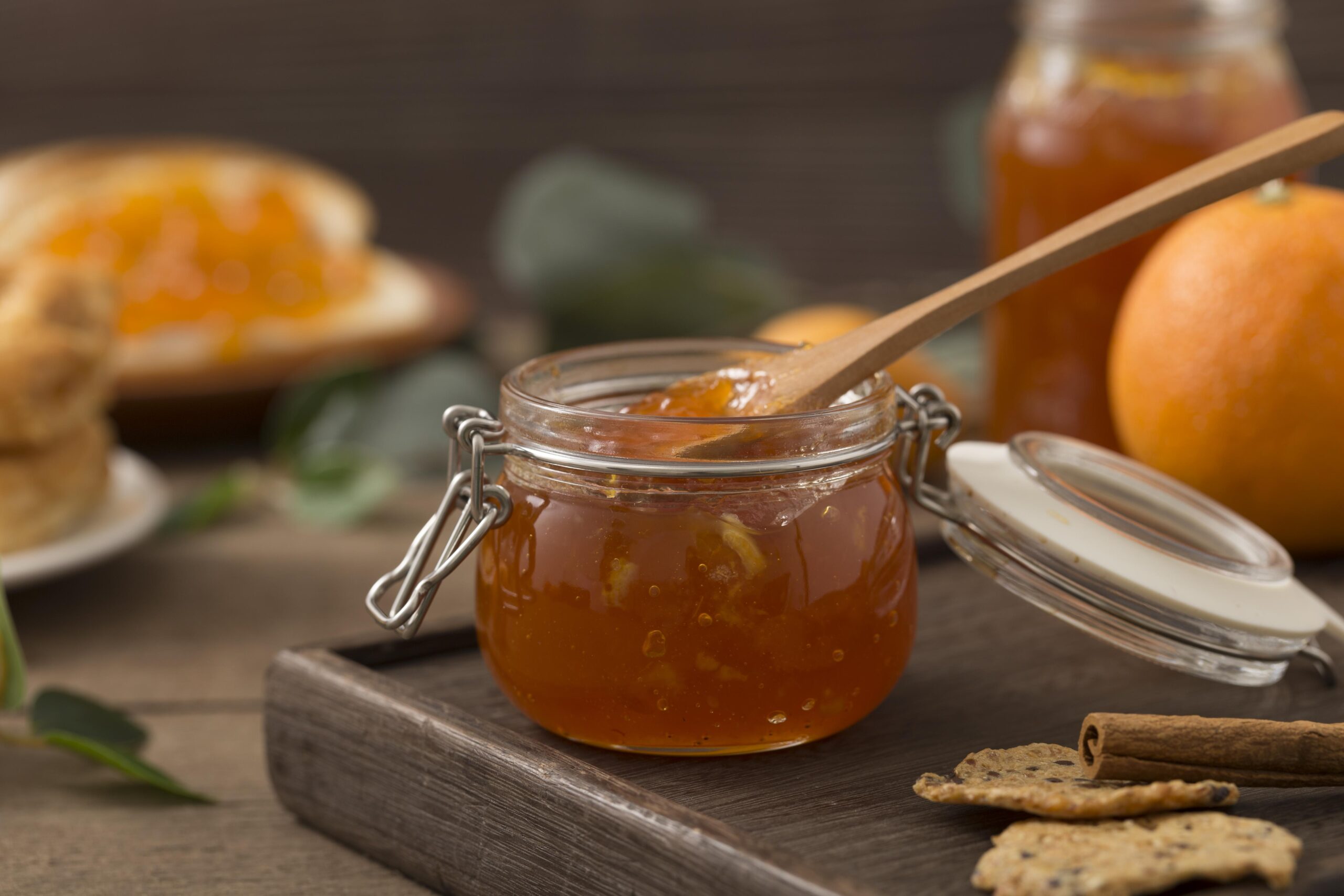

There is nothing quite like the bright, bittersweet pop of homemade orange marmalade. That translucent, amber jelly dotted with perfectly tender peels is a classic for a reason, but finding the right balance of sweet and sharp can be tricky. This recipe uses a simple, traditional technique to ensure your marmalade sets beautifully and captures that ideal citrus zest.
The Secrets to the Perfect Set
Marmalade requires an element that many jams do not: patience. To get that signature texture, the orange rinds must first be cooked until soft, well before you ever think about adding the sugar.
Perhaps the most important element is natural pectin. This is the magical ingredient found primarily in the citrus seeds and the white pith (the membranes between the segments). It is crucial for getting a firm, reliable set without needing to use store-bought pectin.
We’ll wrap these parts of the fruit in a cheesecloth “pouch” and simmer it right along with the rinds, ensuring every bit of pectin is extracted.
Classic Orange Marmalade Recipe
Ingredients
- 2 lbs Seville oranges (you can substitute sweet navel oranges if you prefer less bitterness, though the flavor will change)
- 1 lemon, juiced
- 8 cups water
- 4 lbs granulated sugar
Step-by-Step Instructions
- Prep the fruit and pectin: Wash the oranges well. Slice them in half and squeeze their juice into a very large heavy-bottomed pot. Carefully scoop out all the seeds and the membrane pith from the orange halves, collecting them in a single pile. Tie this mixture tightly inside a small square of cheesecloth with kitchen string. This is your pectin pouch.
- Shred the rinds: Slice the remaining orange rinds into thin slivers or small dice, depending on your preferred texture. Add the sliced rinds, the lemon juice, and the water to the large pot with the orange juice.
- Soften the rinds: Submerge your cheesecloth pouch into the liquid. Bring the entire pot to a gentle boil, then lower the heat and let it simmer uncovered for 1.5 to 2 hours. Your goal is for the liquid to reduce by almost half and for the orange rinds to be completely soft.
- Add the sugar: Remove the pot from the heat. Carefully take out the cheesecloth bag, letting it cool slightly before squeezing all its liquid back into the pot. Squeezing this bag ensures you catch all that important pectin. Discard the bag. Next, add all the sugar to the pot and stir it over very low heat until you can no longer see the sugar crystals.
- Boil to set: Turn the heat up to high. Bring the marmalade to a rapid, rolling boil. Do not stir it often. Continue to boil the mixture for 15-25 minutes. It will bubble intensely.
- Test the set: Before you start cooking, place a few small plates in the freezer. When you think the marmalade is close, take a spoonful of the hot liquid and put it on a cold plate. Let it cool for one minute. If you push the liquid with your finger and it “wrinkles,” it is set and ready. If it is still very runny, boil it for a few more minutes and test again.
- Cool and jar: Let the marmalade cool in the pot for 10 minutes (this is important; it helps keep the peels suspended in the jelly). Ladle the marmalade into hot, sterilized jars and seal tightly.
Top Tips for Marmalade Success
- Don’t overcook the rinds: Do not overcook your rinds during the first simmer. They should be soft but still have some texture. If you overcook them, they can disintegrate later.
- Watch the heat: When boiling the marmalade with sugar, you need that high heat to activate the setting process. If the temperature is too low, it can lead to a dark, caramelized jelly rather than a bright orange marmalade.
- Stir at the right time: After the marmalade has cooled slightly in the pot, give it a final stir before jarring to ensure the peels are evenly distributed.
This marmalade is fantastic on sourdough toast, used as a glaze for ham or chicken, or even drizzled over vanilla ice cream. Enjoy the process!
Comments
Comments are closed for this post.
Failed to load comments. Please try refreshing the page.
Add a Comment
No comments yet. Be the first to share your thoughts!